
The Oversensitized Nervous System: Why Symptoms Fluctuate
Living with dystonia, or any chronic condition, places the nervous system under continuous pressure and strain. When symptoms are unpredictable or uncomfortable, the brain learns to stay on high alert, anticipating the next spike of pain or tension.
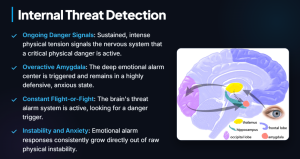
Over time, this can lead to an oversensitized nervous system, where the brain and body become increasingly reactive to sensations, stress, and physical symptoms. The brain and body have adapted to living with chronic stress, pain, and uncertainty by becoming more protective and reactive. This can contribute to increased muscle tension, amplified pain, fatigue, difficulty relaxing, and a feeling of being physically and emotionally “on edge.” This is an area where I focus a lot of my attention in my books and with my dystonia and other health coaching clients.
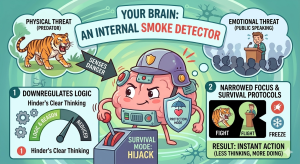
This heightened sensitivity also means that attention and fear can influence symptoms. When the brain interprets a sensation or movement as threatening or potentially dangerous, the stress response activates. Heart rate increases, muscles brace, and symptoms intensify. When the same sensation is viewed as safe or unimportant, the body often remains calmer even if the underlying physical condition has not changed. This helps explain why distraction can reduce symptoms, why stress can make them worse, and why symptoms often fluctuate throughout the day.
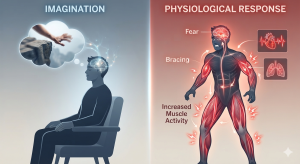
One of my health coaching clients illustrates this very clearly. She lives with cervical dystonia and several other chronic conditions, including persistent dry eye following cataract surgery. At night, when she turns her head to the left, she notices a flashing light in her vision. The flash is not dangerous or causes any harm. It is just alarming and annoying so her brain is on alert for it happening. The moment she anticipates the flash, her shoulders and neck tighten, and her dystonia worsens. She said that even imagining the movement triggers the same chain reaction of fear, bracing, and increased muscle activity.
Interestingly, the flashing light is also present during the day, but in daylight, the ambient brightness washes it out, so she doesn’t notice it — and because she doesn’t notice it, she doesn’t fear it, tense up, or trigger her dystonia. At night, the same physical stimulus becomes visible, and her awareness of it changes everything – anticipation rises, fear amplifies the sensation, and her symptoms escalate. The flash hasn’t changed, but the brain’s interpretation has.

Her experience highlights how an oversensitized nervous system can amplify symptoms beyond the original trigger. When the flashing light captures her attention and is perceived as threatening, her stress response activates. When it goes unnoticed, her body remains at ease. Most of us have experienced something similar: symptoms fading when we’re deeply engaged in an activity or becoming more noticeable when we’re focused on them.
Key takeaway — symptoms can be uncomfortable without being dangerous. When we automatically react with fear and tension, we reinforce the nervous system’s tendency to stay on high alert. When we learn to acknowledge sensations without immediately bracing against them, we help teach the nervous system that it is safe. Over time, this can reduce reactivity, calm the stress response, and lessen the cycle of chronic tension and pain.
Many of you know how difficult it can be to not stay hyper‑aware of your symptoms. This is completely understandable. In these moments, what matters most is how you relate to what you’re feeling. Most of us instinctively fight our symptoms — we get frustrated with them, fear them, blame them, resent them, etc. These reactions are forms of resistance, and resistance tends to amplify discomfort by reinforcing the neural pathways that keep pain and other symptoms active.
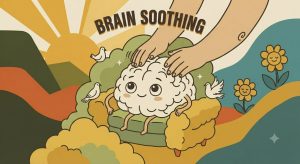
Shifting from resistance to self-compassion is a powerful way to ease the secondary stress that often intensifies physical symptoms. Our brain needs soothing comfort — not a fight. When we battle our bodies, we activate the fight‑or‑flight response, increasing muscle tension, vigilance, and inflammation. Approaching symptoms with curiosity, gentleness, and compassion helps calm the nervous system, creating a safer internal environment where relief, and even healing, becomes more possible.
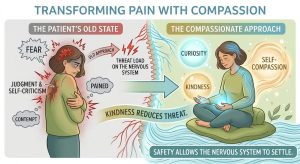
Strategies for changing your relationship to pain and other symptoms:
Meet Symptoms with Gentleness
– Soft Body Scan: Scan your body and consciously envision softening the muscles around the discomfort.
– Kind Touch: Place a warm hand gently over the area that hurts or feels tense.
– Soothing Self-Talk: Whisper comforting phrases like, “I am here with you,” or “It is okay to rest.”
– Comfort First: Adjust your immediate environment by lowering lights, adding warmth, or changing positions.
Cultivate Curious Awareness
– Track Sensations: Notice the exact nature of the symptom without judging it as bad.
– Describe Silently: Ask yourself if the sensation is sharp, dull, hot, cold, heavy, or pulsing. This is a form of Somatic Tracking from Pain Reprocessing Therapy.
– Watch Fluctuations: Observe how the symptom changes, shifts, or moves from moment to moment. Be careful to not let your emotions shift with the highs and lows.
– Look Beyond Pain: Notice the parts of your body that feel neutral, comfortable, or unaffected right now.
Release Inner Resistance
– Drop the Fight: Stop trying to force a symptom to disappear immediately.
– Acknowledge Frustration: Validate your feelings by saying, “It makes sense that I feel frustrated right now, and it is okay to feel this way.”
– Pause the Narrative: Step back from catastrophic thoughts about what the symptom means for the future.
– Allow the Present: Breathe into the current moment exactly as it is, without needing to fix it.
____________________
 Tom Seaman has lived with dystonia since 2001 and devotes his life to worldwide education and awareness for this life changing disorder. He is the author of 2 books: Diagnosis Dystonia: Navigating the Journey, and Beyond Pain and Suffering: Adapting to Adversity and Life Challenges, as well as hundreds of articles on dystonia, pain, and emotional health topics. Tom is a Certified Professional Life Coach in the area of health and wellness, working directly with people to help them manage their physical, emotional, social, and vocational challenges. He is also a motivational speaker and chronic pain and dystonia awareness advocate. Tom is also a volunteer writer for Chronic Illness Bloggers Network, The Mighty, and Patient Worthy. To learn more about Tom, get a copy of his books, or schedule a free life coaching consult, visit www.tomseamancoaching.com. Follow him on Twitter @Dystoniabook1 and Instagram.









Thanks Tom, this is such helpful advice. Curiosity and gentleness, rather than jumping to fear, frustration, and trying to eliminate the symptom. This is a daily challenge with cervical dystonia. I’m finding that acceptance of my body’s symptoms as they are is becoming more important, even as I continue to work for improvement. Thank you for bringing together all these helpful approaches.
I’m really glad you liked this and found it helpful. I’m glad that you shared how important you are finding it to come to terms with and accept the symptoms. It’s amazing how much that can down-regulate the overactive sympathetic nervous system and help us feel better overall, and even help regulate symptoms.